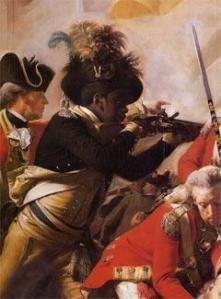
“He has excited domestic insurrections amongst us, and has endeavoured to bring on the inhabitants of our frontiers, the merciless Indian Savages, whose known rule of warfare, is an undistinguished destruction of all ages, sexes and conditions.”–Thomas Jefferson, Declaration of Independence July 4, 1776.
That peculiar passage in the Declaration of Independence always drew me when I was younger. I found it disconcerting that a document in which white men were listing their grievances against an English king they saw as despotic, they at the same time could make such disparaging comments about the indigenous population whose lands they now held. It was one of my first understandings of the great American paradox of liberty and freedom. But it was not until I was much older that I understood the first part: “He has excited domestic insurrection amongst us.” Who had the king of England “excited?” What “domestic” rebellion did Jefferson and the colonists so fear could erupt in their midst? It turned out that my earlier history classes had omitted something from the American Revolution, key players whose significance was enough to warrant mention and concern in the fledgling nation’s premiere document–slaves.
This isn’t alternate history.
Continue reading →
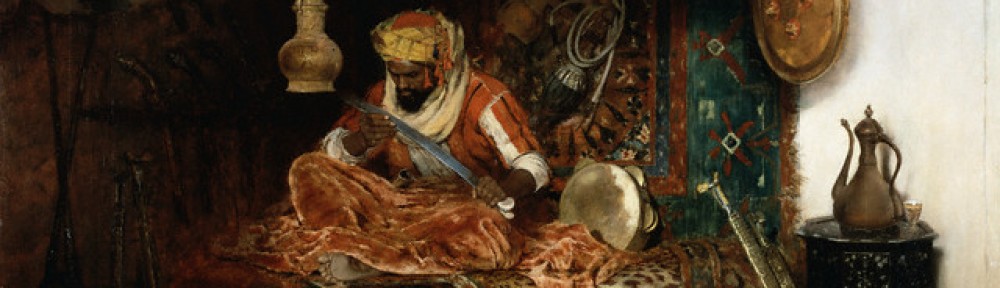
 Is it just me, or does steampunk have an abolitionist problem–or rather, a lack of them? Okay. Perhaps I’m over generalizing. I haven’t read/seen every steampunk story after all. But I’ve noticed that some of the more popular works in the genre, those few that courageously even bother to address slavery, manage to leave out (or somehow weed-out through deft alternative history-making) those figures and groups that were so instrumental in bringing about the end of the slave system in the Atlantic world. Continue reading


 Phenderson Djèlí Clark