Africa, Fantasy, and Worldbuilding

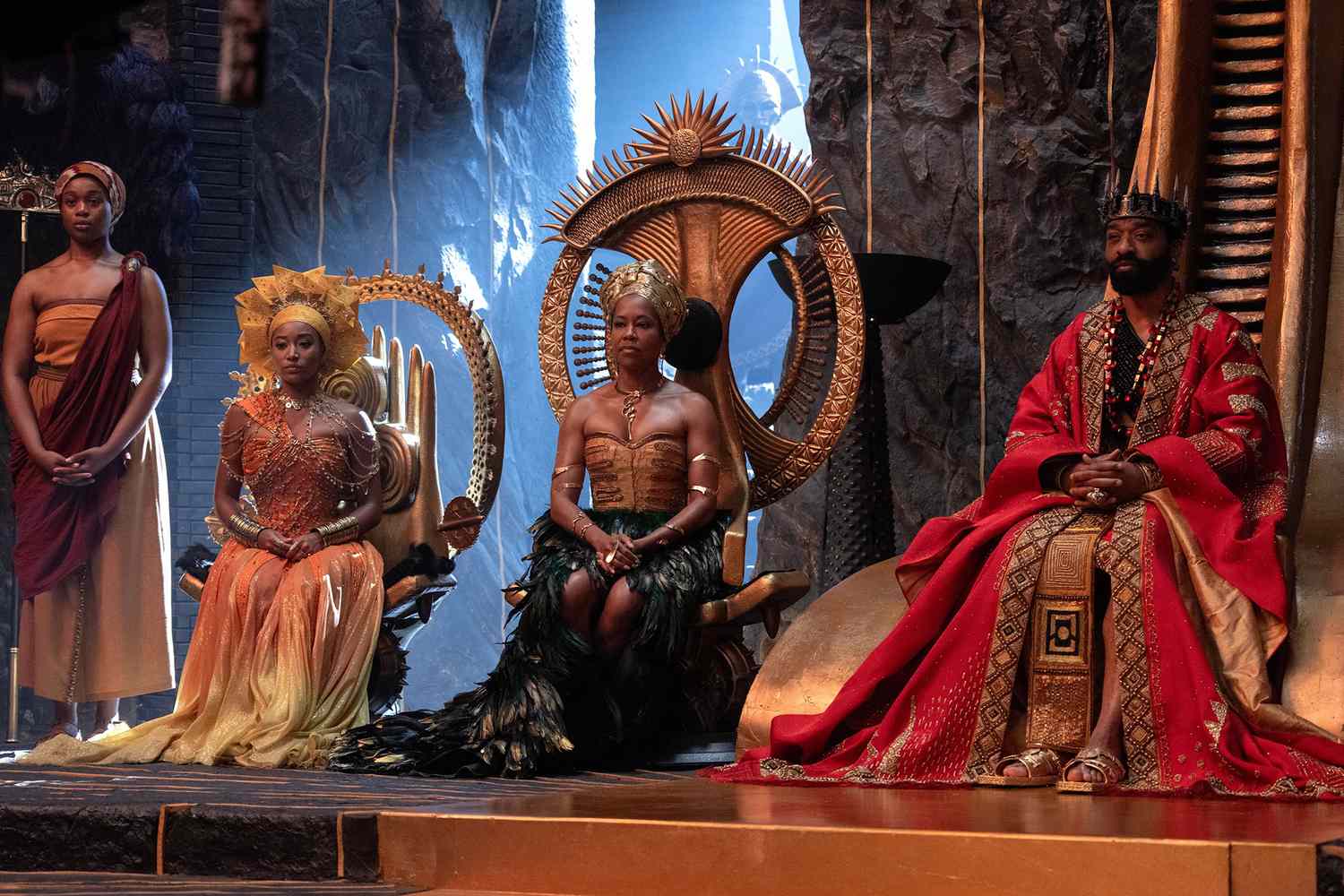
Movie still featuring royal family in film adaptation of Children of Blood and Bone

Over the past few weeks there’s been a lot of discourse about the film adaptation of Nigerian-American writer Tomi Adyemi’s bestselling African-inspired YA fantasy novel Children of Blood and Bone. Much of this has been sparked by the author, who has taken the remarkable step of distancing herself from the film through a series of group chats and videos–calling it “the worst thing I’ve ever had to live through.” Not mincing words. Though no one is quite certain why, it hasn’t stopped 1001 and one write-ups, video reels, and social media posts trying to pinpoint a reason. Altogether, it has thrown the film into utter controversy that’s sometimes hard to follow–but here’s a timeline. Words like “troubled” and “disaster” are now hounding the movie before it even hits screens in early 2027. And new write-ups have emerged about what a failure at the box office might mean for other Black fantasy writers, not to mention its producer Michael B. Jordan, its director Gina Prince-Bythewood, and a star studded cast including Viola Davis, Amandla Stenberg, Damson Idris, Cynthia Erivo, Regina King, Chiwetel Ejiofor, and more. We talking ALL BLACK EVERYTHING. And it’s ALL BLACK DRAMA right now.

But I’m not here to talk about none of that. I have no more idea of what’s going on with the author, the film, or how it’ll be received, than anyone else. So, what’s the point? Instead, I want to talk about another controversy that emerged online as soon as the first photo stills dropped from the movie. And about the joys, rewards, perils, and pitfalls of writing African-inspired fantasy.

Continue reading
Christopher Columbus: Our Original Invader from Mars

_invaders_from_mars_poster_Originally written in 2013, this is the final chapter in a three-part installment on Christopher Columbus beginning with The Other Explorers and Hunting Prestor John in the End Times. This post ponders how the destruction of the Americas, and the accompanying legacies of colonialism and slavery, help shape the fears of our popular imaginings–including science fiction.

Continue reading

Appropriating The Self- Revisiting The Africa of Our Imaginations

200px-Imaro4In the wake of a controversy over who the culture of an entire continent belongs to within the context of its far-flung descendants (many quite involuntarily flung at that), I revisit a set of blog posts I wrote several years ago regarding speculative fiction, world building, “appropriation” and the Africa of our imaginations. Can one appropriate the self?

Continue reading

People Are Alike All Over: The Human Zoo

humanzoogermanyIn the late nineteenth and early twentieth centuries, as race science blended with the new colonial imperialism, “human zoos” became all the rage in the west. Placed into “natural habitats,” adorned in “traditional dress” and sometimes behind bars, people from “exotic” lands were put on display for a gawking public. All of this to prove the racial theories of the day–that people after all were not alike all over.

Art- Poster of the “Peoples Show” (Völkerschau) in Stuttgart (Germany), 1928

Continue reading