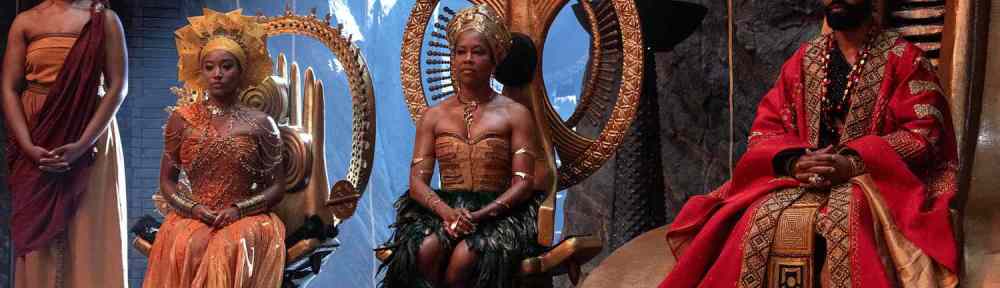
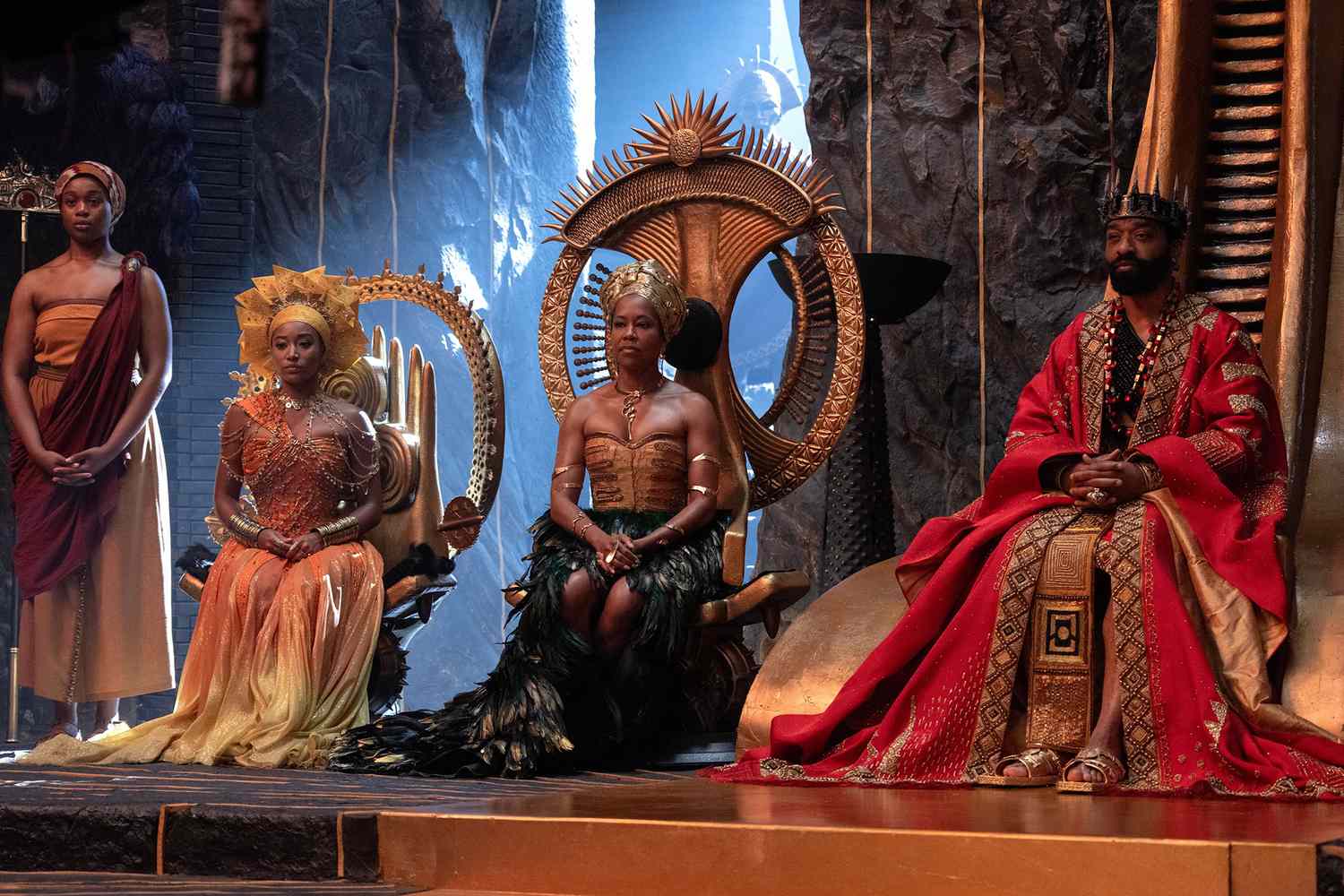
Over the past few weeks there’s been a lot of discourse about the film adaptation of Nigerian-American writer Tomi Adyemi’s bestselling African-inspired YA fantasy novel Children of Blood and Bone. Much of this has been sparked by the author, who has taken the remarkable step of distancing herself from the film through a series of group chats and videos–calling it “the worst thing I’ve ever had to live through.” Not mincing words. Though no one is quite certain why, it hasn’t stopped 1001 and one write-ups, video reels, and social media posts trying to pinpoint a reason. Altogether, it has thrown the film into utter controversy that’s sometimes hard to follow–but here’s a timeline. Words like “troubled” and “disaster” are now hounding the movie before it even hits screens in early 2027. And new write-ups have emerged about what a failure at the box office might mean for other Black fantasy writers, not to mention its producer Michael B. Jordan, its director Gina Prince-Bythewood, and a star studded cast including Viola Davis, Amandla Stenberg, Damson Idris, Cynthia Erivo, Regina King, Chiwetel Ejiofor, and more. We talking ALL BLACK EVERYTHING. And it’s ALL BLACK DRAMA right now.
But I’m not here to talk about none of that. I have no more idea of what’s going on with the author, the film, or how it’ll be received, than anyone else. So, what’s the point? Instead, I want to talk about another controversy that emerged online as soon as the first photo stills dropped from the movie. And about the joys, rewards, perils, and pitfalls of writing African-inspired fantasy.
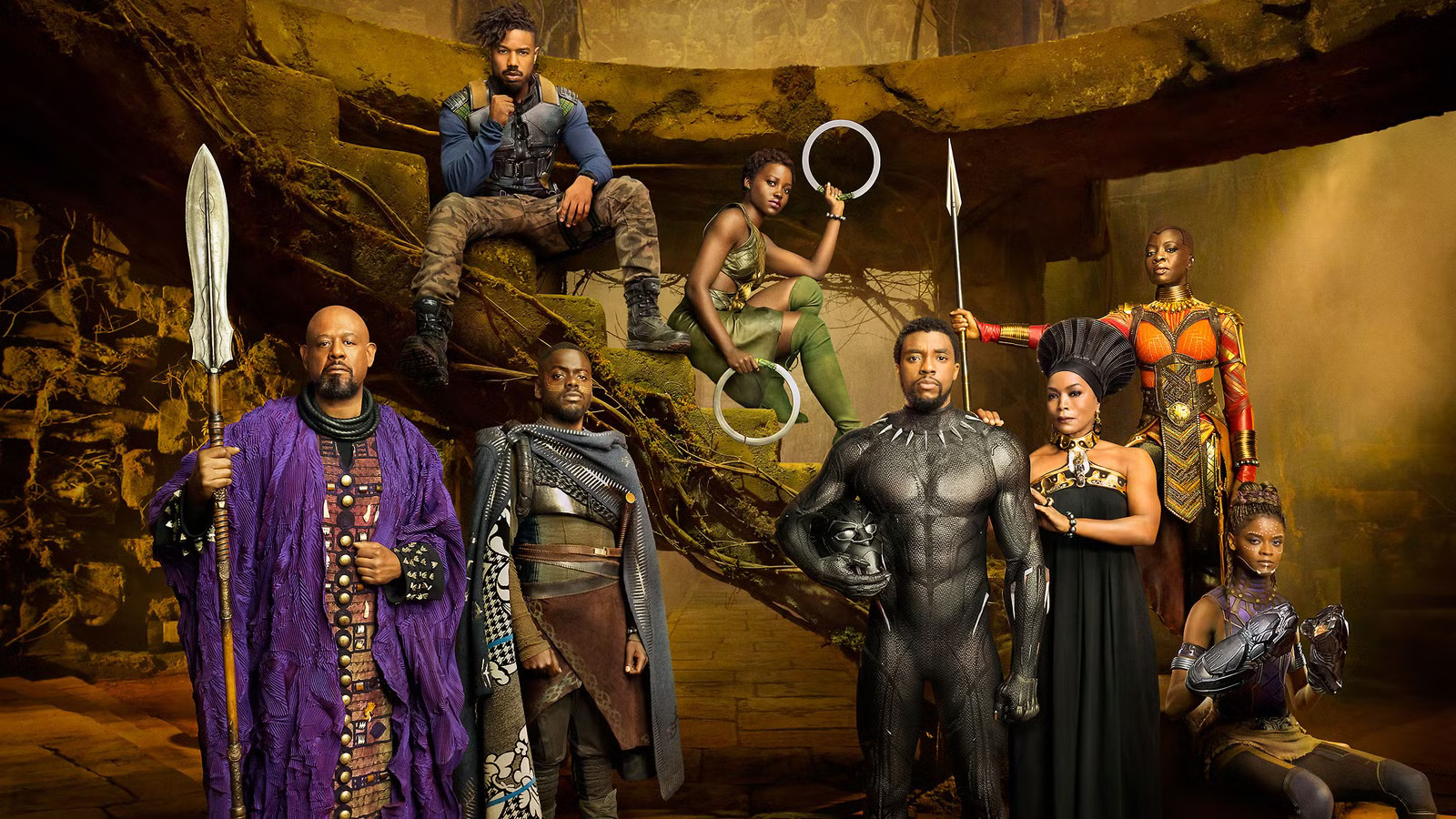
Soon as the first photo stills from Children of Blood and Bone dropped, I winced. Because looking at them, I already knew what I was going to hear. Sure enough, went online, and social media was abuzz. Words like “silly” or “carnivalesque” were being tossed about. “Why all those colors?” others asked. “This looks like some cheap mashup of West Africa,” said another. “Those Syfy channel looking costumes,” one post read. And so on.
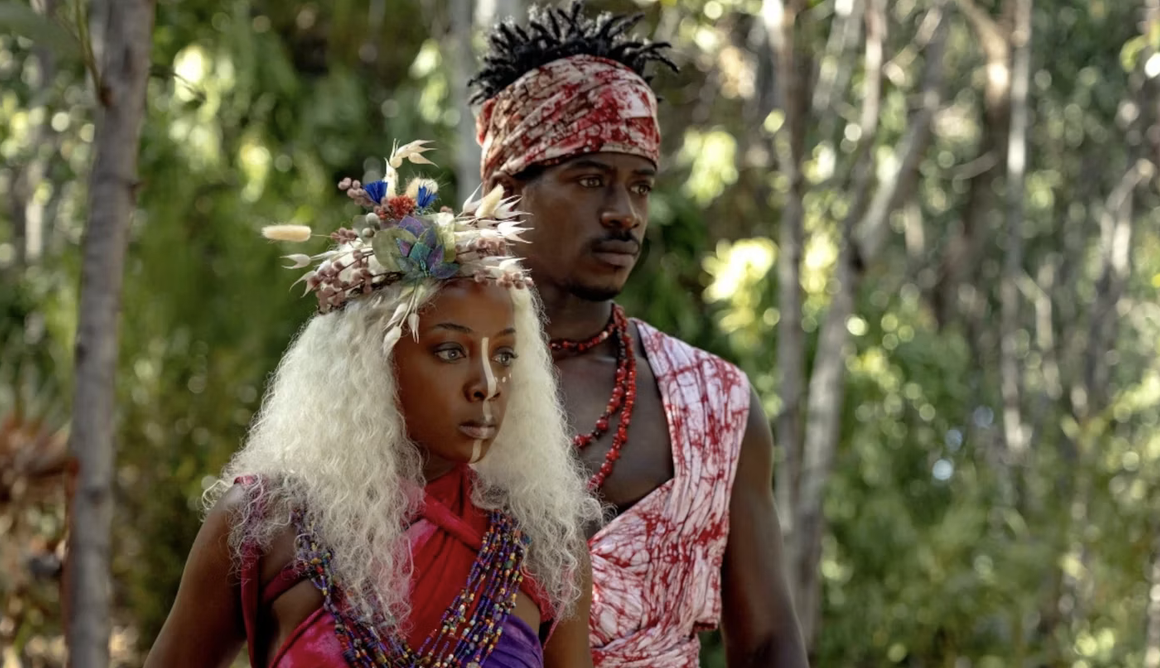
Some of the harshest criticism came from persons currently living in Africa, or those only a generation or two removed from the continent–especially persons of Yoruba descent. Tomi Adeyemi herself is the daughter of Yoruban Nigerian immigrants, and she drew directly from Nigeria and Yoruba culture especially for inspiration. But I thought these critical reactions might happen because I’d heard them before. I remember them, though to a lesser degree, with director Gina Prince-Bythewood’s previous film The Woman King–centered on the (in) famous woman warriors of Dahomey. And for Ryan Coogler’s Black Panther, which some African critics lambasted as a hodgepodge of African culture appropriated for the western gaze. A term was even made for this: “Wakandafication” coined by Black British historian Jade Bentil, critical of the dangers of “appropriation” and essentialism in western use of African aesthetics. As a Black writer of fantasy, I was familiar with a lot of these arguments. I’d been having them with myself well over 15 years, after all.
So, as I’ve said on here before, I *heart sign* fantasy. Because of the more popular books I’ve published, I often get pegged as mainly a writer of alternate history. Or horror with a historical bent. And yeah, I love that stuff too! But at my heart, I’m a fantasy writer. Give me secondary worlds. Give me magnificent beasties. Give me swords and whatnot. Give me magic. It’s the stuff I grew up on–from those Forgotten Realms books to the Wheel of Time. And it’s the stuff I most like to sit down and get lost in. From the grimiest of grimdark like the Malazan series, or beautiful and complex storytelling like Ken Liu’s Dandelion Dynasty. That is my JAM! It’s my cozy. No wonder then, that even in my alternate history or horror stories, elements of fantasy (from magical beings to magic swords) often make an appearance.
As I’ve also talked about before on here, long, long, ago, when I first tried my hand at speculative fiction writing, fantasy was my genre of choice. And I was on a mission. I wanted to write fantasy outside of the usual medieval Eurocentric framework of an elf, a ranger, and a dwarf meet in a tavern. Don’t get me wrong, I had gone through enough Icewind Dale type books to love that stuff. But I also found their lack of diversity, or their cringey use of BIPOC characters, problematic. Looking at you dark elf. I chose an African setting for my first forays into fantasy with hardly a second thought. Most fantasy works by white authors were set in some imagined version of medieval Europe. Black people were from Africa–that’s what I was going with.
And I was hardly the only one. Like Chuck D said, “that thought was thought before.” In the 1970s, the late African American writer Charles R. Saunders began publishing short fantasy stories in small magazine presses. His stories pulled on African history, as opposed to, as he put it, “the usual Celtic, Arthurian and Scandinavian underpinnings” that dominated his childhood and fantasy shelves of his era. “I saw a need,” Saunders claimed, “and believed I could fulfill it.” This would lead to the ground-breaking Imaro saga. Set in a precolonial African-inspired world of spears, monsters and magic called Nyumbani, Imaro tells the tale of an outcast warrior and his larger-than-life quest for his unknown origins.

Back when I first set out to write fantasy, I hadn’t heard of Saunders–whose work had, shamefully, gone out of print. I had enough hubris even to believe I was doing something new–a speculative fiction Jackie Robinson. Turns out, others had already blazed this path. And every Black person I met who wanted to do fantasy, had Africa on their minds. Like them, I used the mishmash and sampling technique common to the fantasy genre. After all, when we read much modern fantasy or watch it on TV, it’s a hodgepodge of various places and different eras of medieval Europe–with lots of stuff completely made up. That’s why Gandalf in the film adaptation of Tolkien’s Lord of Rings can dress like he’s from the 9th century while hobbits are wearing suspenders and waistcoats like they’re just a century shy of Peaky Blinders. Same for the potpourri of fashion, weaponry, armor, reworked pieces of history, etc. in George RR Martin’s Game of Thrones (A Song of Ice and Fire). Can say the same for popular non-European inspired fantasy like The Last Airbender–which blends and remixes so much of Asian culture and its many peoples, you need a team of ethnographers to untangle it. We tend to give these things grace, however. Because they also have orcs. Or wights. Or dragons. Or cute flying bison.
In fact, Saunders explained how he adapted a similar technique to his African inspired worldbuilding. He called this act of sampling and splicing, gumbo–a fitting word as etymologists have long pondered at the term’s origins in multiple parts of Western and Central Africa and how it came to be used in modern Afro-Louisiana lingo;
Everything I absorb goes into a constantly simmering gumbo in my imagination and, when I write, I dip a ladle into that gumbo, and I’m always surprised at what comes out. It’s usually a ‘what-if’, as in ‘what if the Zulus and Masai were neighbours?’ or ‘what if the chemosit, a mythical monster of Mali, were real?’ or ‘what if an African group had domesticated the Cape buffalo and used it for warfare?’
A bit absurd? Sure. But again, fantasy itself is absurd. So hardly anything out of the ordinary.
I did much the same when I started writing fantasy, scouring info on precolonial Africa, including folklore, culture, histories, cosmologies, etc. I had whole books just dedicated to African swords or armor. I collected any stories of African monsters or magical objects. My earliest published fantasy stories like “Skin Magic” or “Ghost Marriage” or “Shattering the Spear” were very much in this vein. I was also very intentional in how I approached my worldbuilding. For instance, I didn’t just cut and paste African folklore into my stories; I recreated them, like how Tolkien turned common western European folklore of orcs and goblins into entire armies. I threw in other genre elements, like cosmic horror. My stories were also waging a political battle against how Africa was depicted in the West. For instance, I chose to excise loaded words like “tribe” from my writing vocabulary. I also found words for African architecture more dynamic than “huts.” Still, the aesthetics of my stories were undeniably African, often particular to the specific region I most drew upon for my given story. You couldn’t miss it. You read em’, and you definitely understood you weren’t in Westeros. And that’s exactly what I wanted. Perhaps for me, I was cooking up more pelau than gumbo.
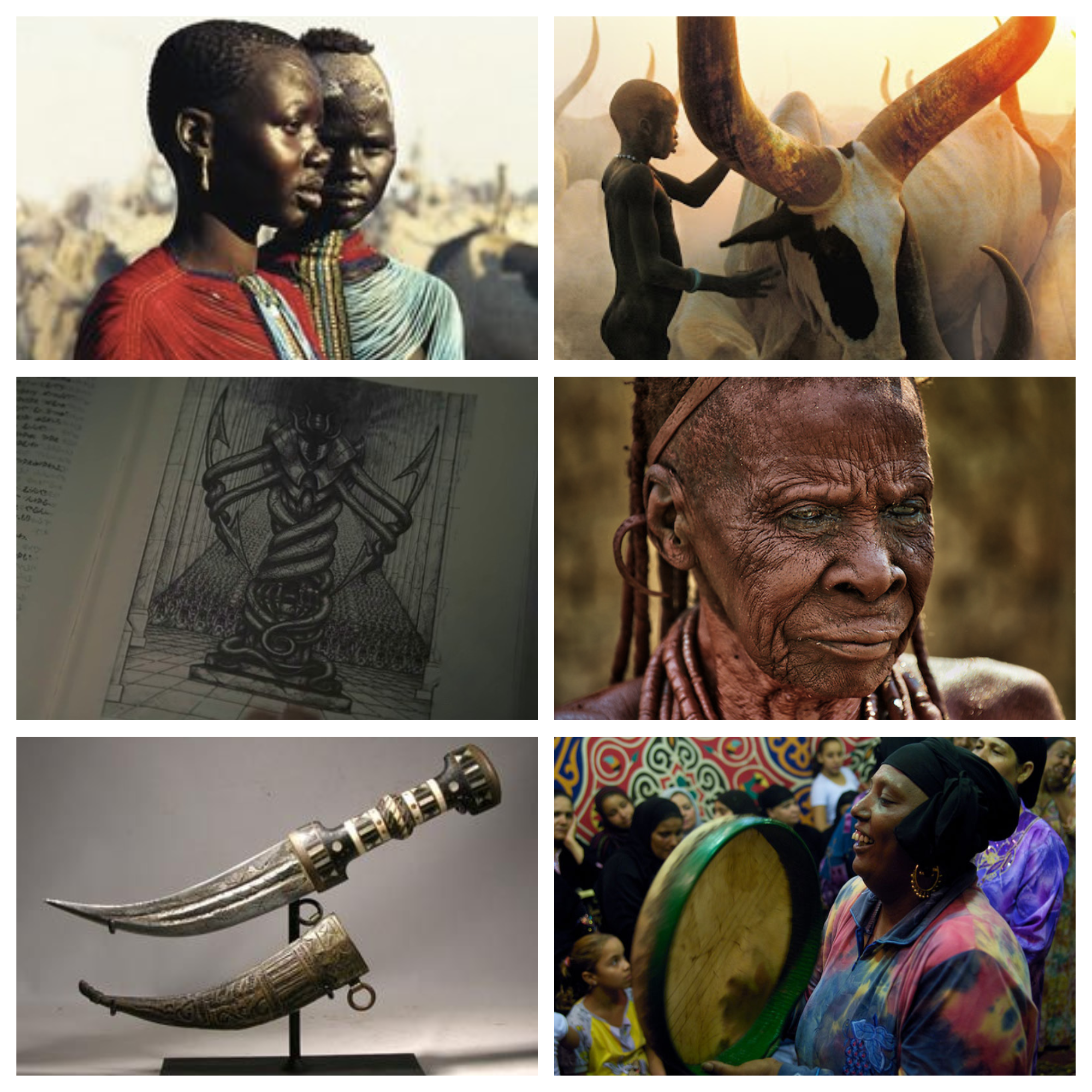
It’s important here to emphasize, much like Saunders, my early African-inspired fantasy stories weren’t actually set in Africa. Not the Africa that exists or even the one that existed in some precolonial time. You can’t find the places I created on a map, even if you might be knowledgeable enough to guess the regions or people/culture that most inspired the tale. These are secondary fantasy worlds deeply *inspired* by Africa, not Africa itself.
This, however, can bring its own problems. Even way back then, I was very much aware that I was playing around with existent cultures, cosmologies, and histories–sampling without a copyright. And while it might make aesthetic sense to me (a person whose history traces to the slave-trade created Diaspora where African diversity is coded into my cultural and genetic DNA) I understood (and accepted) that it might clash with the modern sensibilities and understandings of someone more recently from Africa. The very mishmash and sampling I was doing could throw someone out completely. Some might even find it offensive–hence terms like “Wakandafication.”
Now, I can already see some folks’ hackles rising and nostrils flaring. Especially those of us who are descendants of the trans-Atlantic slave trade that dispersed us (involuntarily) across the Americas in the millions to face slavery, torture, and death–and who managed somehow to survive. I remember feeling a kinda way about the whole thing. Thinking, hold up now, I’m no slouch on Africa. My parents filled our house with books on African culture and history, along with art. I was taken to see African theater. I’d visited Africa at least once before deciding to write African fantasy. Being a political junkie, I even felt it my responsibility to read African newspapers and keep up with the news on the continent. I can name most nations in Africa off the top of my head–though I always forget Sao Tome and Seychelles. Heck, I listened to Fela growing up! That had to count for something! Sure, as the child of Afro-Caribbean immigrants in the U.S., I was more than a few generations removed from Africa. But in my mind Africa was something always distant yet near–in my music, in celebrations like Carnival, in my fashion, my thoughts. So when I began creating worlds out of varied kingdoms, and scoured through the folklore and cosmologies of diverse African cultures for magic systems, gods and monsters, I never thought of it as “appropriation.” Africa was mine. Wasn’t it?
Back in 2012, I wrestled with these thoughts which sparked a very lengthy three-part blog called “Spears, Sorcery, and Double-Consciousness.” In it I looked at past perceptions and feelings of attachment, loss, and alienation experienced by we survivors of the Middle Passage, remembering Countee Cullen’s famous 1925 poem Heritage which asks us to ponder, “What is Africa to me?” Over the space of three blog posts I asked some pointed questions: What it meant for the Diaspora to draw on Africa for fantasy inspiration? Who could claim what? How did people with ancestral ties to no *one* place in Africa view things like ethnic or national belonging differently? Wasn’t Pan-Africanism, after all, born in the West–conceived by Afro-Caribbean and African-American activists? How do uneven power dynamics play out as a Black writer with the near hegemonic media backing of the West? What happens when the Westernized-other seeks to depict the non-Western world–-one which remains both prominent and elusive in his/her imagination? I came up with some thoughts, answers, and sometimes more questions.
In 2015 I returned to the topic after a controversy erupted over Afro-Punk and fashion, where charges of appropriation and the Diaspora again reared its head. And I asked other pointed questions: can a people forcibly torn from their natal origins, appropriate that which was once theirs? Can you appropriate, the self? Or do we need a new term to capture these complicated dynamics? Is there a way in negotiating our identity, within the context of the psychic terror of the Middle Passage that brought it into being, that we can engage in some introspection? And can those from whom we are borrowing find empathy for this unique position?
Further, let’s flip the script. Cultural exchange across the Diaspora does not flow in a singular current, it is bi-directional. In the 1930s Ghana Highlife, the ancestor to much of modern African music, blended African sounds with Trinidadian calypso, African American jazz and numerous other elements to create its distinction. In the 1970s Fela Kuti merged these already blended styles, borrowed stylistically across African cultural sounds, added in African American soul and fused a new form of Afrobeat. African culture after all is not static–and borrows and shares within the continent. Nor is it somehow cut off from external influences, as seen with African patterns and textiles that have their roots in Indonesia, a product of the Dutch colonial exchange. Today, African music, dress, dance and style, while internal and indigenous in origin, has also been impacted (in varying degrees) by cultural music, dress, dance and style of the Diaspora. How then do Africans in turn consume the culture of the Black Diaspora (with all its media wrought distortions) that is consistently streamed across their radios, televisions, computer screens and smartphones? Is that Hip Hop group in Luanda dressed in the style of the Bronx born B-boy given leave to hurl “nigga” so casually? A term born in an Afro-American context? Is it his to use as well, added to his own particular history and negotiation of race, colonialism and identity?
Yeah, I went deep. Cuz the conversation is deep. And yet too often, everyone tries to simplify it. Especially on social media, where nuanced thought goes to die. Caught strays myself just a short while back in the middle of all the Children of Blood and Bone talk, when someone charged me with appropriation of African Yoruba cosmology:
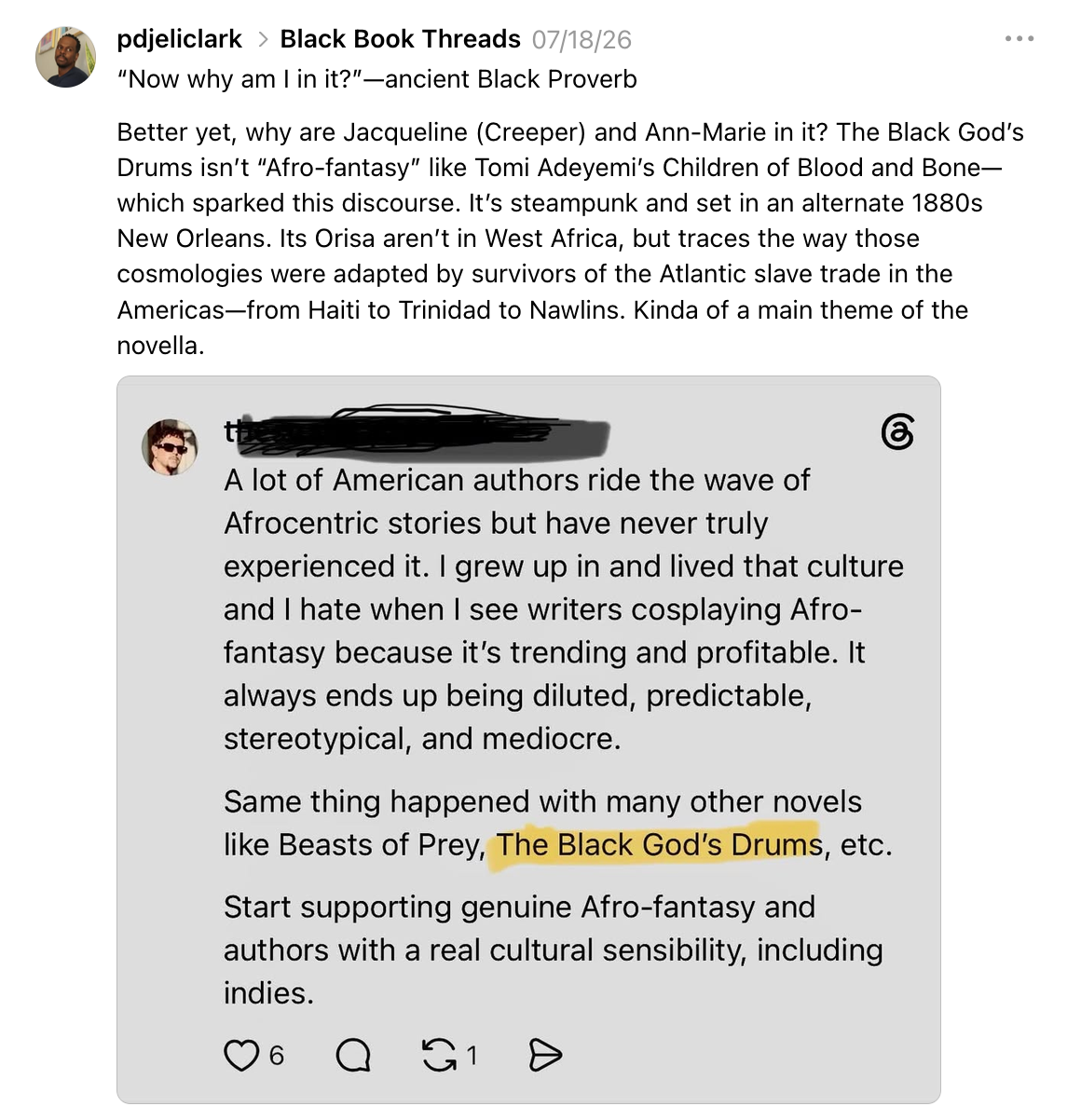
What’s wild, is that the book in question (The Black God’s Drums) ain’t even African-inspired fantasy like Children of Blood and Bone, but instead intentionally set in an alternate New Orleans and draws on the cultures of the slave-trade created Diaspora: from Haiti to Trinidad. Yes, the Orisha are featured. But they are the Orisha as interpreted by enslaved people and their descendants. I literally put it in the dedication:
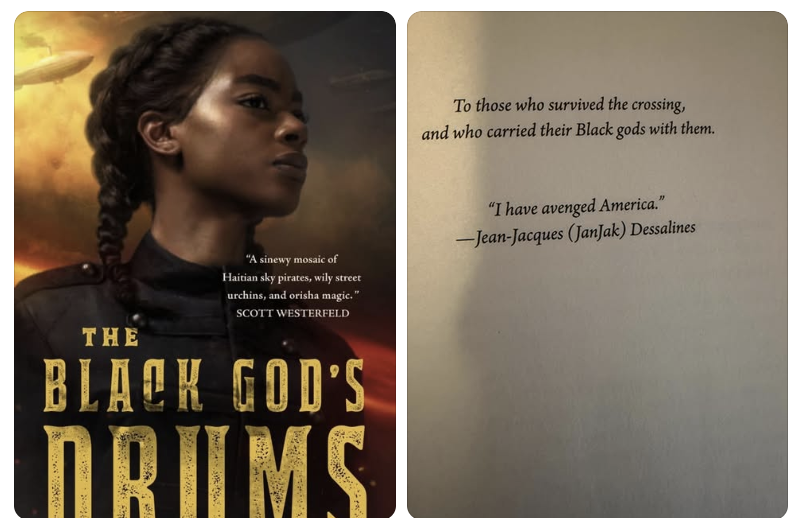
And STILL, folk game gunning for me. These writing streets ain’t safe!
It should go without saying, but the African Diaspora, of course, is made up overwhelmingly of the descendants of the trans Atlantic slave trade. Before 1820, other than the Spanish, more Africans arrived through the slave trade to the Americas than anyone else. For a very long time, the Americas of the Atlantic world was indeed very BLACK. Those descendants arrived with a cultural fabric that stretches across lands, people and ethnic groups from multiple locations in West and Central Africa. Those varied African cultures and people intermixed, exchanged, and fused over generations–-so that cosmologies that might have never met now blended in the “New World” to form creations like Candomble, Santeria and Vodou. When Charles Saunders imagined “what if” far flung African ethnic groups met each other as he created his fantasy world, he wasn’t too far off! These were further fused with the varied non-African cultures they encountered, creating wholly new traditions–what one scholar has called “Neo-African Religions”–-many of them yet imbued with distant transliterated echoes of the African past. This synthesis is a unique experience that “appropriation” does not begin to define, one that continues as the descendants of that forced migration across the Atlantic continue to reach back and draw in cultural traits, re-adapting and imbuing them with meanings that define their present existence. It is for some, as one writer termed it, a form of healing. Any discussion about Africa’s dispersed descendants, generations removed, must take this experience into account if we’re to have an honest or serious understanding.
[Interlude: I know there are some people out there claiming goofy things about the slave trade, where Black people in the Americas are from, and what have you. But I write fairy tales; I don’t believe in them. Where are the ships? Right here. Reading remains fundamental.]
And still, I think there are legit conversations to be had about what it means for the Diaspora to draw on Africa for fantasy inspiration. As I’ve acknowledged before, there is a privilege in being Western, even at its fringes. How does this power play out in our re-imagining of Africa? What aesthetics are we using as we pick and choose from this larger African milieu? How does our blending and synthesis of African culture–-something we’ve been doing in the Diaspora since “talking half African” in the belly of those ships–-rewrite and re-purpose Africa for our own means?
I saw shades of these convoluted issues in the mixed reactions to that first look at Children of Blood and Bone. Though author Tomi Adeyemi is only recently removed from Africa, the issues of the West, an imbalance in media power, and whose gaze is being privileged (and whose interpretation of Africa is being depicted) remain prevalent. And there may be some related factors going on that are worth addressing.
First, there’s the fact that differently from myself or Saunders, Tomi Adeyemi drew directly from a distinct African culture and cosmology–Yoruba culture and cosmology to be precise. In my own African-inspired fantasy writing, I am purposefully vague. Like Haile Gerima Sankofa vague—with characters and settings not directly using our “real world.” Sure, anyone in the know can figure out my inspirations. But I go out of my way to make things as “fantasy” as possible with a clear African-inspired aesthetic.
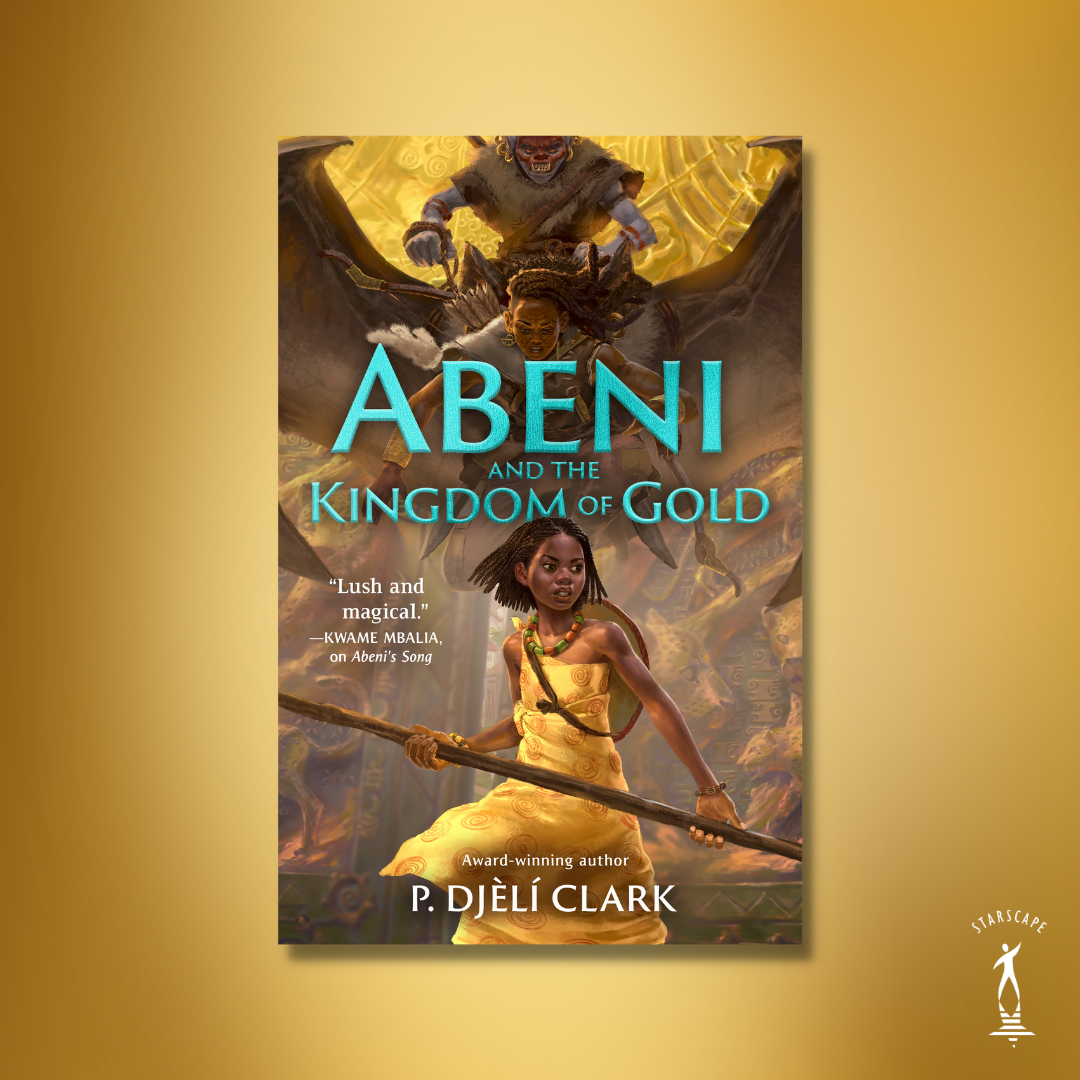
Take for instance my middle grade fantasy series, Abeni’s Song. It is undoubtedly steeped in West African styles, histories, and cultures–though in my own pelau-like way. In the image above, the cover for book 2 in the series, my influences are pretty transparent. Abeni itself is a Yoruba name, though I never name the ethnic group or any ethnic groups in my worldbuilding, opting to rely on alternate ways to recognize kinship and belonging. The Kingdom of Gold featured here drew heavily from Akan history and culture, particularly the Asante state. Most noticeable the monstrous figures in the background are my own interpretation of the sasabonsam and mmoatia folklore common to certain regions of Ghana, Côte d’Ivoire, and Togo–a reminder that the borders of modern-day African nation-states do not necessarily map neatly onto culture. In my adaptation, the vampiric sasabonsam (often described as having bat-like wings or prehensile claws) and mmoatia (often depicted as dwarf tricksters) become small non-human beings who ride about on giant bats. But I don’t mention any real-life gods or spirits or cosmologies. And that’s quite intentional.
Tomi Adeyemi takes a different approach, directly evoking the Orisha and Nigeria in her series. The story is set in The Kingdom of Orïsha, with the names of real-world cities like Lagos and Ilorin converted to fantasy settings. The Orisha themselves make an appearance, and Oya, Yemọja and Shango figure directly into the magic system. And there’s nothing wrong with this. Tomi Adeyemi is well within her rights to approach her worldbuilding this way, especially as she wanted to create a distinctly Yoruba society–drawing on her own very recent heritage. This is probably far more accessible for those more familiar with Yoruba culture, than my own pelau method, which for such folks could be conceived as disorienting. But, that approach isn’t free of risk. Because despite the clamor for #ownvoices, you will not find a harsher critic than those most familiar with the culture you’re drawing from. Whenever I hear non BIPOC writers complain about being nervous writing about cultures outside their own, I can’t help but roll my eyes. Oh yeah? Try being from that culture and writing about it. “It be your own people” remains a whole sermon.
Tomi Adeyemi also draws in Afro-Diasporic religions like Brazilian Candomble, and titles from Afro-Cuban Santeria in her fantasy series. There are also elements that are decidedly non-Yoruba. For some, this is too similar to the mishmash approach of modern western fantasy. Again, think Gandalf and Frodo dressed like they live almost a thousand years apart. But we’ve normalized Eurocentric fantasy so much, that most may not even notice it. When African-inspired fantasy does it, however, whether slightly like Tomi Adeyemi or much more flagrantly like Charles Saunders, it can be jarring for some. Especially when those cultures aren’t ancient and living in the distant past, but still in existence, complete with practiced cosmologies and traditions. People familiar with those cultures, people living with those cultures, will sometimes get “thrown out” of what to them feels like confusion. Even be offended. And that’s okay. We all bring our own experiences to what we read and it will impact our interpretations.
There’s also the issue that literary fantasy and live adaptations can be two different species. Books are often for readers familiar with genre, and quite familiar with the mishmash and licenses taken. Your mileage may vary, but chances are that if you read lots of fantasy an African-inspired world that doesn’t precisely map to the real-life Africa you’re familiar with isn’t going to throw you off too badly. Audience also matters. In my Abeni’s Song series, I know that my audience is primarily a Diaspora audience. I wrote it with them first and foremost in mind. Some of the topics I choose to highlight–for instance slavery–make this all too clear. Sure, I definitely want it to be read by people in Africa or with recent roots in Africa. I also touch on modern topics like resource wars and leadership. And I’ve done talks to African school children about the book through video conferences at absurd times of day (that EST to GMT+2 conversion is a doozy!). But I realize and accept that my style and approach isn’t for everyone. And that too, is okay.
As a reader, you can also imagine the aesthetics of a fantasy novel to your own taste, whatever the author writes. The screen, however, brings in larger audiences who may have never read the books, or don’t have a strong familiarity with the way the West does fantasy. The screen also provides those aesthetics for you. And if there are existent films from said cultures that have established those aesthetics in a way many viewers find more “authentic,” it’s going to cause some confusion and criticism. Nigeria has a well-established Afro-fantasy film tradition, with its own style and aesthetic that might clash with even well intentioned western depictions of a fantasy Africa. Nollywood’s 2022 film King Of Thieves (Agesinkole) has all the royal intrigue, battle scenes, magic and more of any western fantasy epic–and the costuming is amazing!
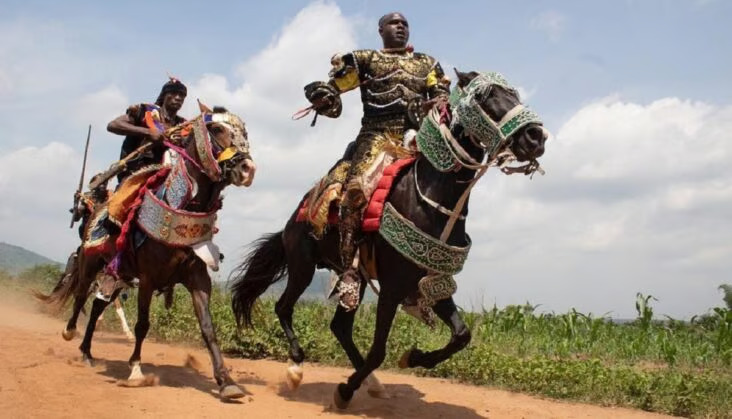
Finally, there is just lots of context over which as a writer you have little control. Creating African inspired fantasy in the West, even for Black writers, including those with recent African backgrounds, brings in long and complicated histories that predate the writers themselves. These include issues of colonialism, Orientalism, anti-Blackness, negative media portrayals, Afro-phobia, the demonization of African cosmologies, exploitation, appropriation, Diaspora identities, African identities, ethnic identities, slavery, current political tensions/conflicts…and, of course the 24/7/365 social media, “Diaspora Wars.” You been on Threads? Just jollof, pelau, plantain, and mac n’ cheese being flung about with reckless abandon.
Trust, that I’m not trying to discourage anyone who wants to do this. We need more African-inspired fantasy! But wading into these waters can be risky. It ain’t for the thin of skin. Despite your best intentions, you’re gonna make choices that trip some of those wires. And you may have to defend your creative decisions and license to skeptical folk who are too used to being exploited. Be self aware. Know what you’re getting into. Make careful choices. Be able to admit mistakes. Have the ability for self introspection. Know that criticism will come your way no matter what. Be able to look at those criticisms honestly. And to live in peace with your own work.
When I first jumped into African-inspired fantasy, Charles Saunders was the biggest name in the genre. Then there were indie Black writers like Milton Davis, who were creating their own fantasy worlds like Meiji. Together with Saunders, Davis publisehd the first of its kind anthology that I’d ever seen dedicated to African-inspired fantasy called Griots, published in 2011. It was followed up with Griots II: Sisters of the Spear in 2014. I got to have stories in both of those. And to be fully transparent, those experiences helped bring me back to fantasy writing after I’d walked away. Another tale for another time. But at the time, I couldn’t help notice that the majority of the authors were (like myself) not from Africa, either directly or a generation removed.
The times have changed.
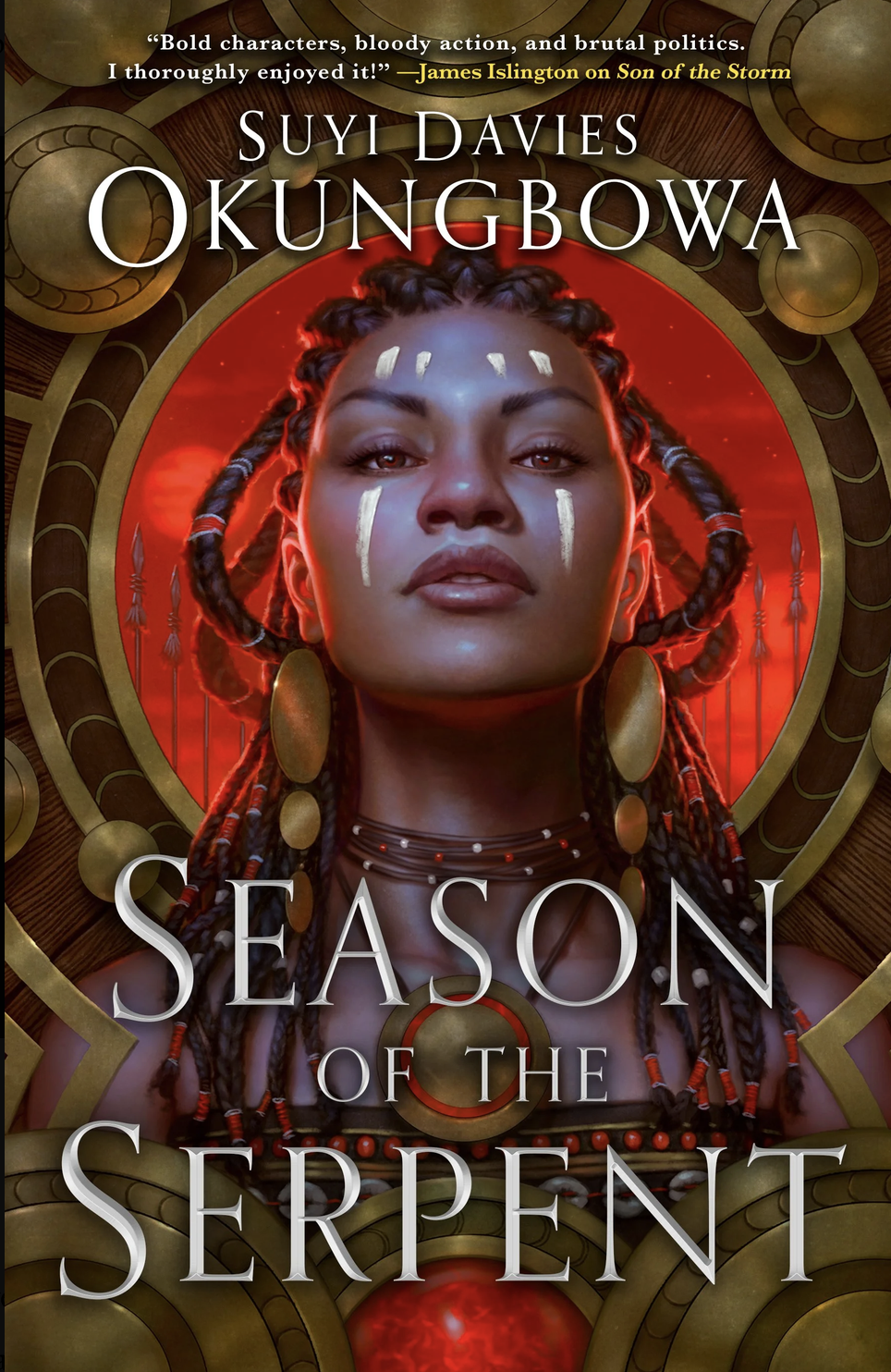
Book 3 in the Nameless Republic trilogy, by Suyi Davies Ogungbowa
African fantasy is no longer relegated to only indy spaces. Mainstream publishing “discovered” that there was an appeal for stories outside of the Eurocentric fantasy norm. And they found Black writers from multiple backgrounds doing it. Ayana Gray is an American writer whose Beasts of Prey series was influenced by a collegiate trip to Ghana and a desire to create magical African-inspired stories. Sierra Leonean American writer Namina Forna drew on her own background as well as numerous cultures and folklore of West Africa to create her YA adventure series The Gilded Ones. Nigerian-Canadian author Suyi Davies Ogungbowa‘s Nameless Republic trilogy draws on both Nigerian and larger West African culture to create a sprawling adult epic fantasy influenced by epic African poems and numerous pre-colonial empires. Moses Ose Utomi is a Nigerian American writer who uses numerous West African cultures and stories write his fantasy novels like Daughters of Oduma and a trilogy of adult fantasy novellas that begins with The Lies of the Ajungo. Tobi Ogundiran is a Nigerian American writer whose dark fantasy stories are collected in his award-winning Jackal, Jackal; he has also written a wondrous fantasy novella duology in his Guardian of the Gods series, that evokes the Orisha in a new setting!
All of these authors and more, continue this tradition all in their own unique ways. They are a reminder that there’s no one way to create African fantasy. Nor is the genre static. It changes adapts, shifts and grows with each new storyteller–as it should. Whatever happens with Children of Blood and Bone the film, African literary fantasy remains in good hands. We’re not going anywhere.
 Phenderson Djèlí Clark
Thanks for sharing the difficulty of writing about other worlds from your place in this one. It was actually reassuring to know that writers, thoughtful ones at least, struggle to get the things that are rooted in our world (aka Earth-616/the Biff Timeline) right.
Thanks for reading Andrew! And LOL for Marvel / Biff timeline mashup!
What a wide sweep of the spear you grasp and swing my friend, but now all is in order with this highly informed discourse. I too await the reception of the film but know that the world-building writers of Africa and the Diaspora by no means will be dissuaded. I am graced with original copies of Saunders novels having purchased them when first published. To see and experience what has transpired since, almost single-handedly inspired by Milton Davis, is an excursion to the far fringes of the spirit realm and back. You have opened the door to a vast realm of film and novel, explanation and invitation all naysayers and the immersed need just journey forth. It’s going to get deeper still with adaptations of Nnedi and others so THANK YOU!
Darrell,
Thank you for this worthy and very pithy response. You have a way with the words. Hold onto those original copies of Saunders novels! We were all so fortunate to have him as a progenitor of this genre. And yes, Milton has carried the torch almost single-handedly. I don’t think it’s far-fetched to say, that the work he has done (is still doing) in indie spaces helped open up doors that many Black writers (across the Diaspora) are being let into today. So THANK YOU! And please keep reading.
This was such a great read and thoughtfully explained in a way that I can filter it through my own experience as a first-gen Latina.
There is such an issue with individuals who come from what I call “places of lingering” – descendants of ‘fractured’ transnationalism. I’ll never be able to claim “the motherland” because it’s not the nation-state to which I belong, but I can’t claim this new land because I’m too indefinite for the kind of categorization it feeds off. The writing streets will never be safe for people who are a funhouse hall of mirrors and we’re still trying to produce a language to translate that uncertainty. Unfortunately, the sharpest criticism starts closest to home and I’ve tried to make myself appreciate that it’s made me resilient against outside opinions; it still stings though because sometimes it affects the kind of writing and research I do.
But I just want to say as both an academic and fiction writer myself, your post was so reassuring. And oddly, I appreciate that this is a thread that even The Greats themselves (I am literally so overwhelmed that I have studied your works in every stage of my career and I get to leave a comment on your blog like no big deal — what an honor!) have struggled with and continue to struggle with.
Thank you so much for reading. Glad it had a general appeal, because I definitely think it can map onto multiple experiences. And that bit about “fractured transnationalism” is…whew! And “places of lingering” is so apt. There’s a whole between-ness going on that I hesitate to call “liminal,” but it’s a kindred feeling. Whole layers of Duboisian double-consciousness to unpack. Great to meet another fellow academic willful and utterly mad enough to take up a SECOND writing job! What is wrong with us?!? A luta continua…