
Tips for Understanding Black History Month- 2015 Edition

blackhistorymonthIt’s that time of year again, Black History Month. Beginning every February in the United States, the country sets aside 28 (or 29 in a leap year) days to celebrate, discuss and engage Black History. Innocuous enough. And yet what seems to happen every Feb. 1st, is the beginning of a 28-days long ritual of whining (how come they get their own month?), misconceptions and endless micro-aggressive racial faux-pas. And this isn’t just from the usual sky boxes of white privilege; there are black people (some of them noteworthy) who wade into…well…the stupid. So here are a few tips to better understand the month, both for those who have to endure the stupid and for those who might be enticed to engage in the stupid.

This is just an updated list from an identical post I did last year. But guess what? It never gets old because the stupid never changes.
Continue reading →

Beyond Westeros- Sisters of the Spear

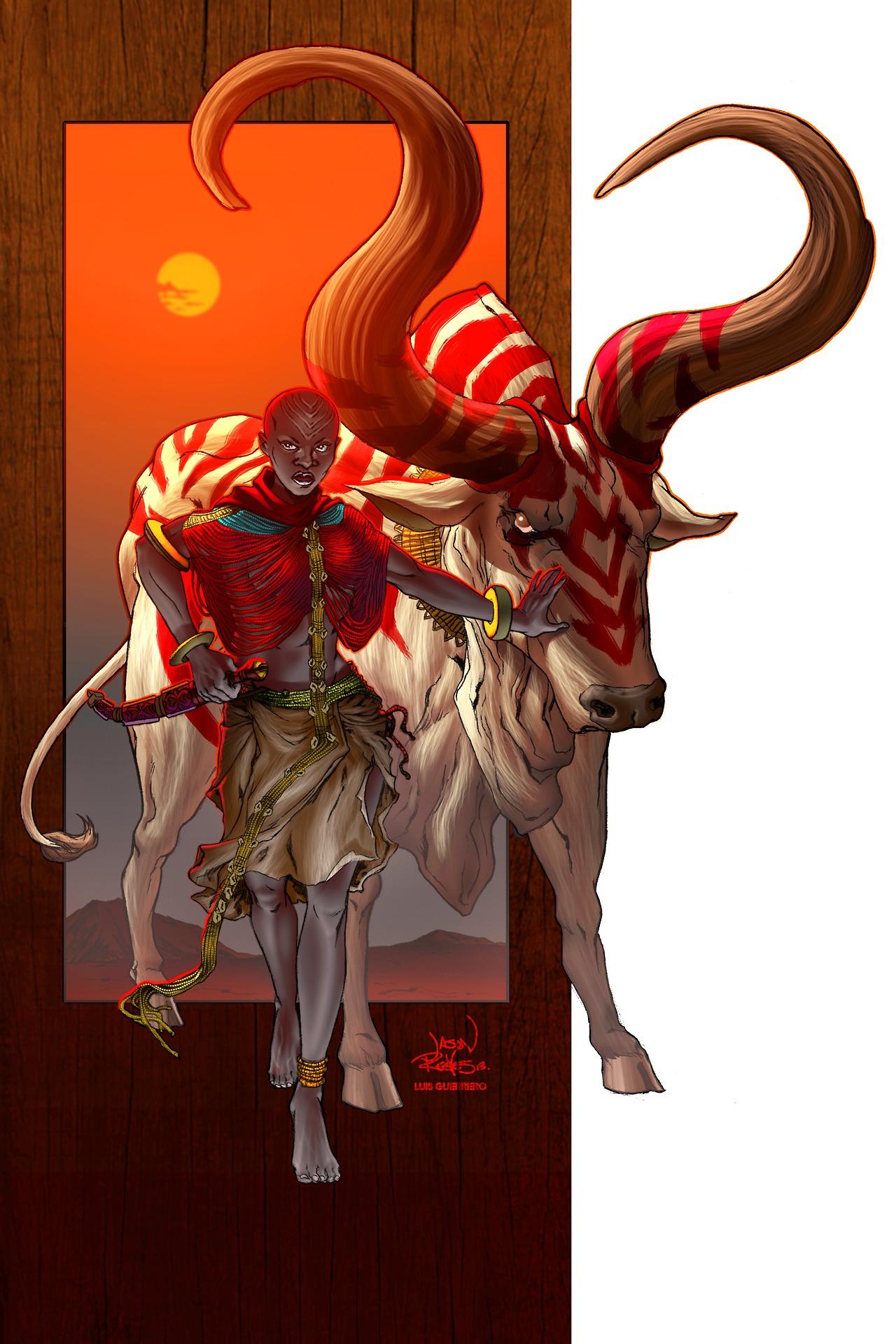
ayen and bullSisters of the Spear is an anthology of “seventeen original and exciting” fantasy tales featuring heroines of color, set in realms of magic, monsters and myth outside of the Eurocentric norm. Yes Virginia, there is life–and fantastic stories to be told–beyond Westeros.

“Ayen and Bull”- art by Jason Reeves. Story by “moi”

Continue reading →

Can Photos Lie?- Images from the Colonial Imaginary

Ovambo woman 1936Much of the mental imagery we conjure of the non-Western world in the past century come from endless photos–often of varied peoples in fantastic headdress, wrapped in “exotic” clothing and striking regal poses. For artists, creators and those looking for “authenticity” or understandings of cultures and peoples seemingly “lost in time,” these images are invaluable. But how authentic are such glimpses of the past? Especially when constructed through a colonial lens? Can photos…lie?

Continue reading →

Black Empire: George Schuyler, Black Radicalism and Dieselpunk

blackempire3232011Sometime in the 1930s, a black journalist is kidnapped in Harlem by the charismatic Dr. Henry Belsidius, leader of the Black Internationale–a shadowy organization determined to build a Black Empire and overthrow the world of white racial hegemony with cunning and super science. Journalist George S. Schulyer’s fantastic tale was written in serials in the black Pittsburgh Courier between 1936 and 1938 under the pseudonym Samuel I. Brooks. It quickly found a loyal following among African-American readers, who saw in Dr. Belsidius and the Black Internationale a heroic, sci-fi tale of black nationalism, triumph and race pride. The newspaper was surprised at the serials’ growing popularity, and pushed for more–sixty-two in all. Yet no one was as surprised at the story’s success than George Schulyer who, disdaining what he saw as the excesses of black nationalism and race pride, had written Black Empire as satire.

Continue reading →