Steampunk This! – The Fascinating Life of Mary Bowser

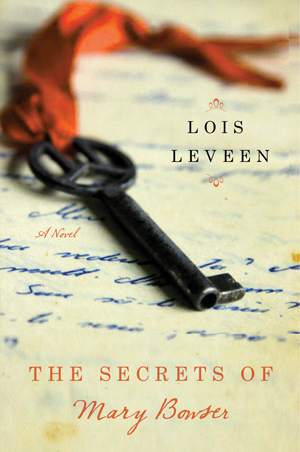
“Mary Bowser, born into slavery in Virginia sometime around 1840, was, alternately, a missionary to Liberia, a Freedmen’s school teacher — and, most amazingly, a Union spy in the Confederate White House.”–Lois Loveen

Continue reading →

Cloud(ed) Atlas

“Everything is connected.” That’s the theme behind the new film by Tom Tykwer, Lana Wachowski, and Andy Wachowski, Cloud Atlas. Based on the novel by David Mitchell, the movie follows the interrelated lives of several figures across time and space–from the letters of a young lawyer in the 19th century Pacific, to the far-flung future “After the Fall.” The Wachowskis and Tykwer do their best to bring a complex literary story to life on the big screen; how close they came to hitting the mark however is debatable.

Continue reading →

Black-a-Moors in the European Imagination II: Beyond Dolce and Gabbana

Detail of statue of St. Maurice, Magdeburg, Germany, Cathedral of St. Maurice and St. Catherine, choir, ca. 1240-50

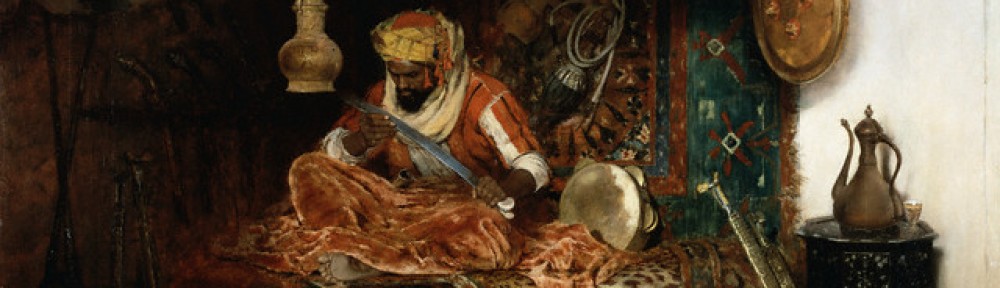
The recent use of earrings fashioned in the images of exotic black women by Dolce and Gabbana during a fashion show has caused understandable controversy. Critics charge the imagery is too reminiscent to slave-era derived caricatures of blacks, like Mammy or Little Sambo. D&G has denied racism is at play, and instead point to a history of black-a-moor decorative art on the Italian peninsula dating back to the medieval era, where blacks were numbered among the Arab-Berber armies that invaded Sicily in the 10th century. The truth may lie somewhere between the two claims. While black-a-moor decorative art indeed predates slavery and black caricatures like Mammy, their history is rooted in the European imagination–and come with inherent contradictions. As shown in a previous post, in medieval European stories and legends, black-a-moors appear as threatening figures associated with the Muslim world. But, as I discuss here, they could also take the guise of benevolent allies. Over time, these varied depictions would meld with the coming era of African slavery, where skin color became increasingly tied to servitude and bondage.

Continue reading →

Black-a-Moors in the European Imagination: Beyond Dolce and Gabbana

Last month fashion icons Dolce & Gabbana sent models down the runway sporting earrings carved in the likeness of black women. The uproar was instantaneous. One story described the earrings as “slave-like,” linking them to a long history of black caricatures. Another lampooned D&G for engaging in “cartoonish, debasing, subaltern imagery that would make even your politically incorrect Grandpa think twice.” The official media term for them became, “slave earrings.”

Continue reading →

Steampunk Ida B. Wells-Barnett: Anti-Lynching, Anti-Victorian Crusader

“One had better die fighting against injustice than die like a dog or a rat in a trap.” – Ida B. Wells-Barnett

At a recent history conference, I had the fortune of attending a plenary titled “Mightier than the Sword: Conversations on the Life and Legacy of Ida B. Wells-Barnett.” The panel featured historians Mia Bay, Paula Giddings and Patricia Schechter (among others), all of whom have authored works on the famed anti-lynching crusader. Though I’d studied Ida B. Wells-Barnett previously, during the discussion I was once again struck by her intense radicalism, which ran counter to the sensibilities of gender, activism and racial justice that pervaded the times. As often happens, my historian’s mind wandered into the speculative–particularly steampunk, where the Victorian Age’s analogous twin across the Atlantic, what Mark Twain satirized as “The Gilded Age” and well into the later “Progressive Era,” carried a violent dark side that Ida B. Wells-Barnett dedicated her life to revealing.

Continue reading →