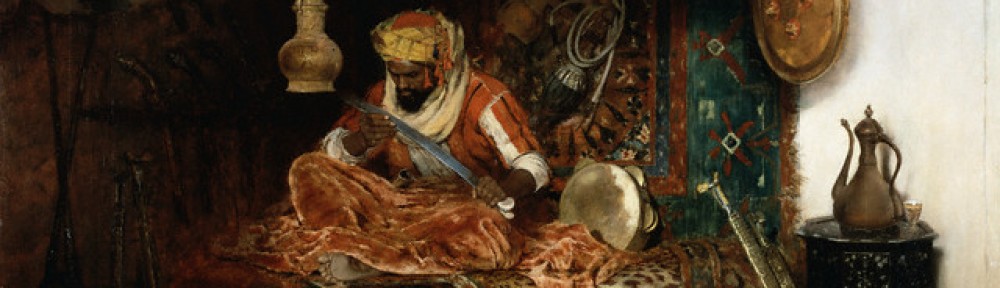
In the wake of a controversy over who the culture of an entire continent belongs to within the context of its far-flung descendants (many quite involuntarily flung at that), I revisit a set of blog posts I wrote several years ago regarding speculative fiction, world building, “appropriation” and the Africa of our imaginations. Can one appropriate the self?
Tag Archives: Speculative Fiction
Early Black Writers, Speculative Fiction and Confronting Racial Terror
How to Spite A Racist Troll: Support Black Dreams
This March, African-American indie author Milton Davis released his long-awaited Steamfunk adventure From Here to Timbuktu. Filled with heroes, heroines and (of course) all things steam, the story is set an alternate 19th century world where the United States shares North America with a nation of liberated slaves called Freedonia, Mali is still a powerful kingdom in West Africa and an ambitious Prussian officer has nefarious motives. It’s a fascinating, imaginative bit of world building that should be welcomed by everyone in the genre. Not so however for racist trolls, who live to crush black dreams.
People Are Alike All Over: The Human Zoo
In the late nineteenth and early twentieth centuries, as race science blended with the new colonial imperialism, “human zoos” became all the rage in the west. Placed into “natural habitats,” adorned in “traditional dress” and sometimes behind bars, people from “exotic” lands were put on display for a gawking public. All of this to prove the racial theories of the day–that people after all were not alike all over.
Art- Poster of the “Peoples Show” (Völkerschau) in Stuttgart (Germany), 1928
Memoirs of an Atypical Blerd
A few years ago someone told me I was a Blerd. I had no idea what they were talking about. But (as I was then told) I’m black, I like SFF, and I talk about it a whole lot. So that makes me a Blerd. Okay. Fine. Whatevs. I didn’t really expect the term to catch on. I mean c’mon. Black + Nerd? Shows how much I know. Today Blerds are everywhere. There are Blerd sites, Blerd podcasts, Blerd blogs, Blerd meetups–you name it. Blerd has become a community. Blerd can maybe even be called a movement. Blerds are also remarkably diverse. And it turns out using one story to define them, may limit the full breadth of who or what they (we) can be.
Art: Phil Noto, Variant cover, Captain America
