 In 1453 Constantinople fell to the Muslim Ottoman Turks, removing the last stronghold of Christendom in the East. The news sent shock waves throughout Europe. The Byzantines were no friends of the Papacy; in fact, the Eastern Christian city had been brutally sacked by reckless Norman Christian Crusaders nearly two and half centuries earlier, from which they never recovered. Still, the loss of Constantinople was a staggering blow.
For one, it placed the Sultan Mehmet II and his victorious armies right at Christendom’s doorsteps–and indeed, fears of the “dreaded Turk” would fill the minds of Europeans for generations, as the Ottomans rolled through the Balkans and reached the gates of Vienna. For the devout, here was yet another sign of the impending Apocalypse, that would pit the defenders of Christ against unbelievers. For European sailors and merchants, it meant the valuable flow of Eastern spices, silk and other goods–once controlled in great part through Constantinople–was now blocked by a hostile rival force. For investors in the profitable sugar plantations in the Mediterranean, it meant the drying up of much-needed supplies (from timber and Slavic slaves) to feed the sugar industry, and an increasingly dangerous waterway. A long period of Muslim-Christian détente would give way to religious rivalry, as two emerging fiscal-military states–the Ottomans and the Habsburgs–now battled over spheres of power for the next three centuries.
So what do Muslim conquests, the Apocalypse and trade have to do with Christopher Columbus and our primal fears of alien invaders? Perhaps everything. But if you like, you can skip past the history lesson to come and go right to Alien Columbus.
Continue reading →
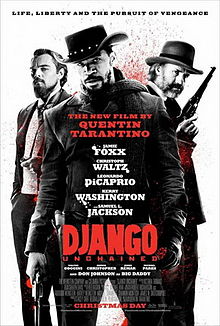 Django Unchained, director Quentin Tarantino’s ode to 1970s Blaxploitation flicks and the famed Italian spaghetti westerns of the same name, tells the story of the freed slave Django (Jamie Foxx) who goes on an orgy of revenge killings to rescue his wife Brunhilda (Kerry Washington) from her sadistic owner. Set in the American South two years before the Civil War, Django (though in many ways a western) is rooted in slavery–it is the film’s backdrop, the driving force behind the plot and what creates both heroes and villains of its main characters. Yet the slavery of Django bears only a passing resemblance to the slavery of our national past. Rather, it is the slavery of popular folklore, social mythology and age-old Hollywood caricatures–the slavery of our imaginations.


 Phenderson Djèlí Clark